Nigel Godrich has formed a trio with Joey Waronker and Laura Bettinson.
Godrich and Waronker earned credibility from having knocked around as
producers and collaborators with Radiohead, McCartney, REM, and Beck, to
mention only a few. Bettinson, having been associated with somewhat
lower profile projects like Dimblebly & Capper, Femme, and Eckoclick, is significantly less renowned, and half the age of the other two in the band.
However, the secret weapon here is, in fact, Bettinson. She provides
the focus and, as the voice of the band, she sets the tone, which is
effortless, and slightly detached, but not without joy.
The album
sounds like a bunch of immensely talented friends jamming together over a
weekend. The overall sonic palette throughout the project is comprised of deep bass, lush and fuzzy synth parts, the syncopated
and off-kilter accents of the tasty percussion, and occasional retro
noises. Godrich sticks to a limited choice of synth sounds,
providing a bed of cohesion. He seems to have a thing for a fizzy
timbre that recalls, to me at least, the Korg Poly800 from 1983.
Waronker always finds inventive, dancey, catchy patterns that often
achieve the level of “the hook,” even before the vocals begin. With
great taste, he knows that interest is often created not by adding more
stuff, but by dropping things out at the right time. Bettinson is the
anchor with her elusive words, the smart, pop melodies and that
just-got-out-of-bed, slightly dazed, vocal delivery. Without her, the
band would still be pretty good, but very different. With Bettinson,
the trio has created an intriguing and appealing whole that works like a
dream.
Static Light:
The
songs dwell in the land of loops; repeatable fragments with ongoing variations
that keep things from becoming too predictable or robotic. It’s at once
hypnotic, droney, dizzying and invigorating. There’s a nice sense of
spinning in each tune. Every song sets up its own percolating system,
starts rolling, and it just pulls you along. The temptation would be
natural to stretch any of these tunes out ad infinitum and just keep playing
with the details. But they brilliantly decided to keep the tracks
brief, so you will probably find yourself going back to the beginning of
this collection, over and over. The album has a feeling of
“rightness,” and is certainly one of my favorite efforts of 2012. Their Tumblr is pretty awesome too (it's actually Laura's tumblr; and she seems to have a knack for finding the most overheated and outlandish things on the Web).
Sunday, November 4, 2012
Friday, September 28, 2012
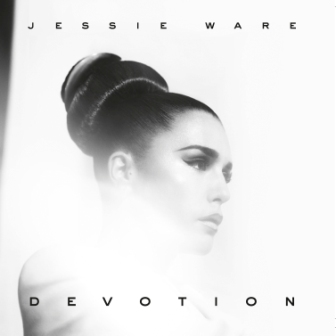
Jessie Ware. Devotion (2012).
Oh,
this is good. Some are thinking of Jessie as the new millennial Sade
in the way she melds cool and sensuousness. Solid songwriting wrapped
in electronic adornment, with live guitar provided by Dave Okumu, which
is very welcome.
Not really electronica, or straight pop, or nouveau R&B, Devotion takes elements of all of those and makes something very personal from the combination. I’m reminded of Bryan Ferry’s solo albums, in that it dwells in darkness and space, with fine details that glint from the shadows. There are many enticing details that emerge on headphones, but it’s never messy or random. Like Ferry, Ware works a catch phrase, such as on No to Love, and weaves atmospheric magic from its repetition.
110% is light and lovely, but not entirely representative of the album, which is pretty dark, filled as it is with a taste for deep heartbreak.
110%:
Jessie’s voice is usually chill, with just a hint of soulful aura. Unlike many singers, who oversing to the degree that it’s a relief when they pull back, JW rarely seems to flex a muscle. But when she does, as on Running, or Taking In Water, it’s a real thrill. On Something Inside she sounds like an angel.
Devotion has the potential of becoming a classic, it’s contemporary but not trendy. I can imagine people putting this on 15 years from now and saying, “I still love this.” It was announced this month that Devotion is up for the UK’s Mercury Prize.
Here’s a live version of the title track. It’s only based on two chords, D Maj going to F# Maj with the third in the bass, but they’re a major third apart, which leaves the tonality uneasy and ambivalent (Hey, that’s the Coltrane change!). I love the focus and precision of her band in this performance.
Devotion:
Much more than a great debut, it’s feels like a career making record. It makes one ponder how she could possibly create a stronger follow-up. This album is so chic, I feel like I should dress up to listen to it. Could be album of the year for me.
Not really electronica, or straight pop, or nouveau R&B, Devotion takes elements of all of those and makes something very personal from the combination. I’m reminded of Bryan Ferry’s solo albums, in that it dwells in darkness and space, with fine details that glint from the shadows. There are many enticing details that emerge on headphones, but it’s never messy or random. Like Ferry, Ware works a catch phrase, such as on No to Love, and weaves atmospheric magic from its repetition.
110% is light and lovely, but not entirely representative of the album, which is pretty dark, filled as it is with a taste for deep heartbreak.
110%:
Jessie’s voice is usually chill, with just a hint of soulful aura. Unlike many singers, who oversing to the degree that it’s a relief when they pull back, JW rarely seems to flex a muscle. But when she does, as on Running, or Taking In Water, it’s a real thrill. On Something Inside she sounds like an angel.
Devotion has the potential of becoming a classic, it’s contemporary but not trendy. I can imagine people putting this on 15 years from now and saying, “I still love this.” It was announced this month that Devotion is up for the UK’s Mercury Prize.
Here’s a live version of the title track. It’s only based on two chords, D Maj going to F# Maj with the third in the bass, but they’re a major third apart, which leaves the tonality uneasy and ambivalent (Hey, that’s the Coltrane change!). I love the focus and precision of her band in this performance.
Devotion:
Much more than a great debut, it’s feels like a career making record. It makes one ponder how she could possibly create a stronger follow-up. This album is so chic, I feel like I should dress up to listen to it. Could be album of the year for me.
Wednesday, August 15, 2012
Call for Works: Wired Kingdom - September at Arts Center of the Capital Region (Troy, NY)
Wired Kingdom is an exhibit and showcase of locally made, digital and electronic art at the Arts Center of the Capital Region, in Troy, NY.
The
Arts Center of the Capital Region is accepting proposals for an
upcoming onsite exhibit and showcase of digital and electronic art. The
exhibit will run September 17th - 29th culminating with an opening , and
live performance showcase on September 28th as part of Troy Night Out.
Artists currently living in the Capital Region and working in
electronic and digital media are welcome to submit proposals for the two
week gallery show,
and/or short performances to be presented/screened/played on the
evening of the 28th. Works which feature some interactive component are
highly encouraged.
Deadline for proposals: Friday, August 31st
Send description of piece and relevant digital files electronically to:
alana@artscenteronline.org
Questions? Call (518)273-0552 ext 233.
alana@artscenteronline.org
Questions? Call (518)273-0552 ext 233.
Tuesday, July 17, 2012
Pram
Does
anyone remember Pram? Anyone??
They're still around, but they don’t seem to come up in discussion very often. Well, actually, they almost never do, as far as I know. But if you’re fans of Broadcast, or Stereolab, you might want to look into this quirky ensemble. In fact, one of their drummers was a member of Broadcast for a while, and singer Rosie Cuckston had a duo, called Monade, with Letitia Sadier of Stereolab during the late 90s. So there. Lots to dig around for, as they have released over 20 albums, EP’s and 7’s over the last 19 years.
The Archivist - Pram:
They're still around, but they don’t seem to come up in discussion very often. Well, actually, they almost never do, as far as I know. But if you’re fans of Broadcast, or Stereolab, you might want to look into this quirky ensemble. In fact, one of their drummers was a member of Broadcast for a while, and singer Rosie Cuckston had a duo, called Monade, with Letitia Sadier of Stereolab during the late 90s. So there. Lots to dig around for, as they have released over 20 albums, EP’s and 7’s over the last 19 years.
The Archivist - Pram:
Friday, June 29, 2012
Controllerism
I'm somewhat nostalgic for the old days (the late 90's-early 00's), when it was the height of the cutting edge avant garde to just use a laptop and make noise (anyone remember the "Onkyo" phenomenon?). No video, no instruments, no controllers, nothing to detract from pure sound:
Aoki Takamasa: Live @ Tokyo Polytechnic University:
Good times.
Since then, MIDI controllerism has become de riguer if you are making electronic music in performance. As a performer, you can have a lot more immediate flexibility pressing buttons than continually trying to find the sweet spot on your screen with a touchpad. And from the point of view of the audience, you look like you're "doing something." Personally, I think a large part of controllerism is a reaction to an audience that always expects a visual component to any music performance. The last time I checked, music was something you primarily listened to, not watched. Who goes to MOMA, sees a Picasso and says, "Great painting, but where's the soundtrack?" I believe the visual prejudice engrained in our appreciation of music is so overwhelming that it remains unquestioned, and unexamined. Francisco Lopez knows what I'm talking about, he blindfolds his audience.
Anyway, it all started with the Monome, a wooden box with a grid of buttons that control things your computer already does. Then, the Monome wannabe's came along: the Tenori-On, and the Arduinome. If you were daunted by the $1K or more price tag for one of these puppies, you may have waited for the Akai APC40, or the Novation Launchpad, which is not much over $100, works great, and can emulate some of what the Monome does ( I have a Launchpad, and it rocks).
What got me going on all of this was a video I found
on the Monome Web site that showed highlights of the LA Monomeet held in California last
December. I had never heard of any of these composers before, but I was
so impressed with all of their musicianship and skill, I just had to share
it. I really like how these musicians are able to do fairly challenging
electronic music which is also immediately accessible, successfully bridging the divide between "experimental," and "pop." And yes, it is
exciting and fun to watch:
Tuesday, May 29, 2012
Kylie. Anti-Tour.
I had kind of thought that Kylie as "Aphrodite" was a tad too much. I'm all for kitsch and ridiculous glamour, but we already know Kylie is divine, so making her into a Greek goddess was a bit redundant for me. Now she's doing the Anti-Tour, a "B sides and Rarities" thing, very rock 'n' roll. This seems like the right move for her now. She's ditched the costume changes and elaborate scenarios for a pair of cutoff's and a Marilyn T-shirt. I have to say, I think I prefer Kylie just standing in front of a band, being herself.
Friday, April 20, 2012
Cocteau Twins
If
you’re not familiar with Cocteau Twins, they’re pretty much credited
for inventing their own subcategory of pop music during the 1980’s.
Hypnotic, vibrant and ecstatic, they consistently dwelled in a lush and
uplifting world of breathless wonder, inspiring perhaps dozens of band that followed them.
On Blue Bell Knoll (1988), they perfected their celestial wall of sound. Pitchfork puts it in their list of the best 100 albums from the 1980’s at # 81, nestled between Perverted by Language, by The Fall (#82), and New Day Rising, by Husker Du (#80).
I had the extreme thrill of seeing them perform twice in New York; in November of 1990, at the Ritz, and in March of 1994, at Roseland. At the Ritz, they performed in their classic lineup of Robin, Simon, Liz, and the reel-to-reel tape machine. Robin had some problems with his pedal board and they took an early (and lengthy) break to work on it. They had a full band at Roseland, with a live drummer and extra guitarists.
Cocteau Twins were one of those bands that seemed to create a singular, alternate universe of pop music that felt alien but vaguely familiar, like a suddenly reemerged memory of an enchanted realm to which you longed to return.
Live: The Spangle Maker (released 1984). This creeps up on you, but stay with it, it gets pretty intense...
Live: Orange Appled from Love’s Easy Tears (released 1986). They’re on the cusp of their pinnacle here...
Heaven or Las Vegas (1990). At their height of popular acceptance...
Soon afterwards, they purchased a recording studio and formed their own label, Bella Union, then promptly split up. The split was brought about by the separation of Guthrie and Fraser as a couple, effectively ending the band, at which point Cocteau Twins entered into a realm of legendary myth and beatification.
On Blue Bell Knoll (1988), they perfected their celestial wall of sound. Pitchfork puts it in their list of the best 100 albums from the 1980’s at # 81, nestled between Perverted by Language, by The Fall (#82), and New Day Rising, by Husker Du (#80).
I had the extreme thrill of seeing them perform twice in New York; in November of 1990, at the Ritz, and in March of 1994, at Roseland. At the Ritz, they performed in their classic lineup of Robin, Simon, Liz, and the reel-to-reel tape machine. Robin had some problems with his pedal board and they took an early (and lengthy) break to work on it. They had a full band at Roseland, with a live drummer and extra guitarists.
Cocteau Twins were one of those bands that seemed to create a singular, alternate universe of pop music that felt alien but vaguely familiar, like a suddenly reemerged memory of an enchanted realm to which you longed to return.
Live: The Spangle Maker (released 1984). This creeps up on you, but stay with it, it gets pretty intense...
Live: Orange Appled from Love’s Easy Tears (released 1986). They’re on the cusp of their pinnacle here...
Heaven or Las Vegas (1990). At their height of popular acceptance...
Soon afterwards, they purchased a recording studio and formed their own label, Bella Union, then promptly split up. The split was brought about by the separation of Guthrie and Fraser as a couple, effectively ending the band, at which point Cocteau Twins entered into a realm of legendary myth and beatification.
Subscribe to:
Posts (Atom)